10 Signs Your Parent May No Longer Be Safe Living Alone
One of the most difficult realities adult children face is realizing that a parent who has always been independent may no longer be safe living alone.
For many Arizona families, the signs develop gradually. A forgotten doctor’s appointment. A stack of unopened mail. A small fall that didn’t seem serious at the time. Over months or years, these small concerns can begin forming a larger picture.
The challenge is that most families don’t know exactly when concern should become action.
Nobody wants to overreact. At the same time, waiting too long can lead to preventable accidents, hospitalizations, financial problems, and emotional stress for everyone involved.
Recognizing warning signs early gives families more choices and more time to create a thoughtful plan.
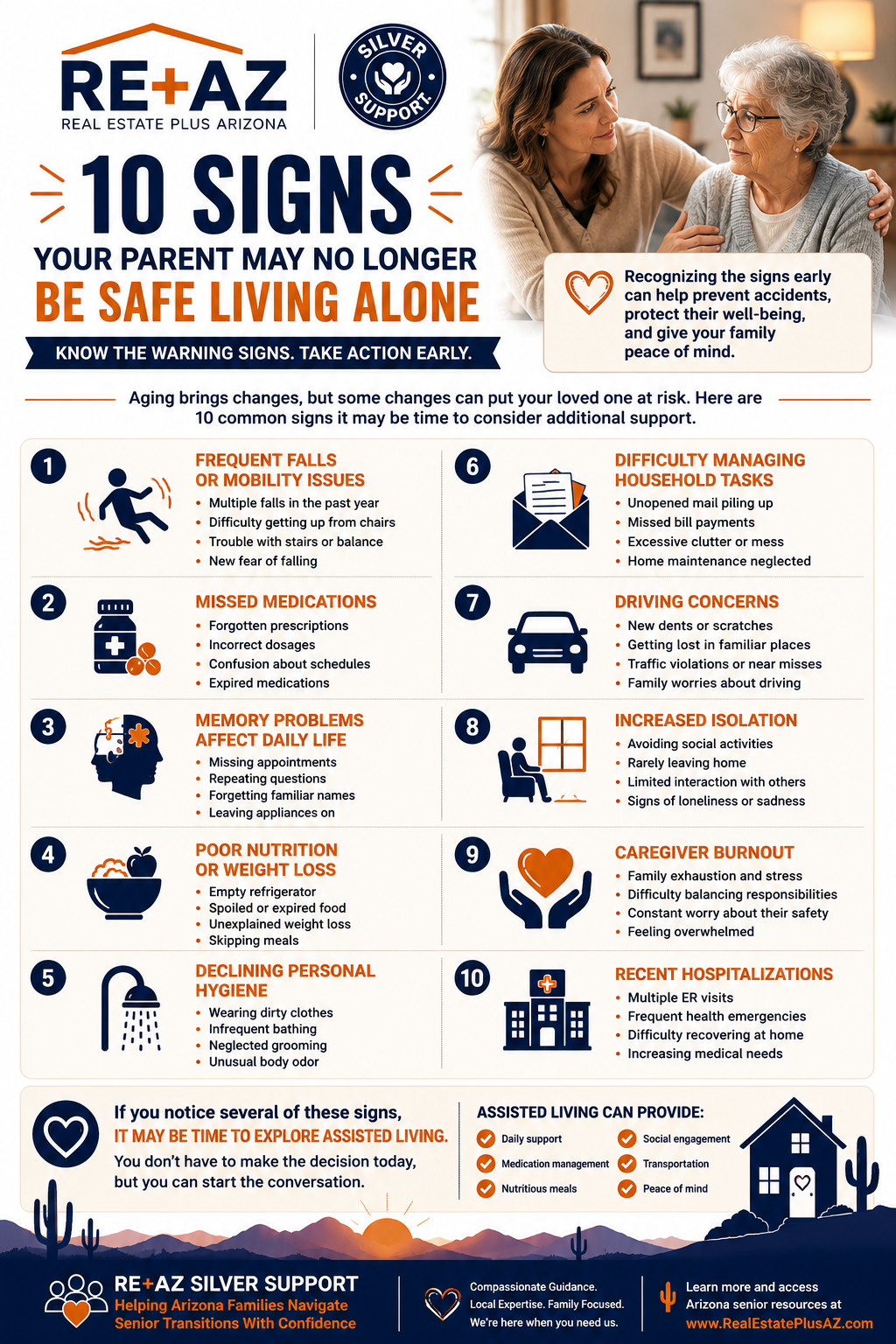
If you’re concerned about an aging parent, here are ten signs that may indicate they need additional support.
1. Frequent Falls or Mobility Problems
Falls remain one of the leading causes of injury among seniors.
Many families first notice problems when a parent begins moving differently around the home. They may hold onto furniture while walking, avoid stairs, or complain about balance issues.
Warning signs include:
- Multiple falls within the past year
- Difficulty standing from a seated position
- Bruises with unclear explanations
- Fear of walking alone
- Trouble climbing stairs
Even if no major injury has occurred, recurring falls often indicate that daily living has become more difficult.
Families comparing future care options often find it helpful to understand the differences between assisted living and independent living before an emergency occurs.
2. Medication Mistakes
Medication management becomes increasingly complicated as people age.
A parent may have several prescriptions, multiple doctors, and changing dosage instructions.
Warning signs include:
- Missed medications
- Taking double doses
- Expired prescriptions
- Confusion about schedules
- Pill organizers that remain untouched
Medication errors are one of the most common reasons families begin exploring senior care alternatives.
3. Memory Problems Affect Daily Life
Occasional forgetfulness is normal.
The concern arises when memory issues begin affecting safety, finances, or daily routines.
Examples include:
- Leaving the stove on
- Missing important appointments
- Repeating the same stories or questions
- Forgetting familiar names
- Getting lost while driving
When memory concerns become more frequent, families often begin researching memory care options and learning about the differences between standard assisted living and specialized support programs.
Memory changes do not automatically mean a move is necessary, but they should never be ignored.
4. Poor Nutrition or Unexplained Weight Loss
Maintaining proper nutrition can become difficult for seniors living alone.
Shopping, meal preparation, and cleanup may feel overwhelming.
Watch for:
- Empty refrigerators
- Spoiled food
- Significant weight loss
- Lack of fresh groceries
- Skipped meals
Many seniors stop cooking balanced meals long before family members realize it.
Assisted living communities often provide structured meal programs that improve nutrition while reducing daily stress.
5. Declining Personal Hygiene
Personal care changes can indicate that everyday tasks are becoming increasingly difficult.
Signs may include:
- Dirty clothing
- Body odor
- Infrequent bathing
- Neglected grooming
- Poor dental hygiene
While these changes can feel uncomfortable to discuss, they often provide valuable insight into a senior’s ability to manage independently.
6. Difficulty Managing Household Responsibilities
A house requires ongoing attention.
Bills must be paid. Maintenance must be completed. Mail must be sorted.
When those tasks begin piling up, it may indicate deeper challenges.
Watch for:
- Unopened mail
- Missed utility payments
- Excessive clutter
- Neglected repairs
- Unsanitary conditions
Many families first begin considering senior housing options after noticing significant changes inside the home.
If housing decisions become necessary, understanding the process of downsizing can make future transitions much smoother.
7. Driving Concerns
Driving represents freedom and independence.
Unfortunately, physical and cognitive changes can make driving increasingly risky.
Potential warning signs include:
- New dents or scratches on vehicles
- Getting lost in familiar neighborhoods
- Traffic violations
- Near misses
- Family concerns about safety
Driving conversations are often among the most difficult discussions families face.
However, they can also provide important clues about overall independence and decision-making abilities.
8. Increased Isolation
Social isolation affects both physical and mental health.
Many seniors gradually withdraw from activities they once enjoyed.
Watch for:
- Rarely leaving the house
- Avoiding social events
- Reduced interaction with friends
- Signs of depression
- Increased loneliness
Isolation often accelerates cognitive decline and can negatively impact overall well-being.
One major advantage of assisted living communities is their ability to provide daily opportunities for social engagement and connection.
9. Caregiver Burnout
Sometimes the warning sign isn’t the senior.
It’s the caregiver.
Adult children frequently find themselves balancing:
- Careers
- Children
- Relationships
- Household responsibilities
- Caregiving duties
Over time, those responsibilities can become overwhelming.
Warning signs include:
- Constant stress
- Exhaustion
- Anxiety
- Frustration
- Health issues caused by caregiving demands
Families often feel guilty considering assisted living.
In reality, seeking additional support can improve quality of life for both the senior and the caregiver.
Many Arizona families discover this while researching how to talk to parents about downsizing and future care needs.
10. Frequent Hospitalizations or Emergency Room Visits
Repeated medical emergencies often indicate increasing support needs.
Warning signs include:
- Multiple ER visits
- Repeated falls
- Medication-related complications
- Difficulty recovering from illness
- Increasing health challenges
When emergencies become more frequent, it may be time to evaluate whether the current living situation remains sustainable.
Planning before the next emergency occurs gives families more options and greater peace of mind.
Why Families Often Wait Too Long
Many adult children recognize these signs but delay taking action.
Common reasons include:
- Fear of upsetting a parent
- Guilt
- Uncertainty about options
- Financial concerns
- Hope that things will improve
Unfortunately, waiting often results in fewer choices.
The best transitions usually happen when families begin planning before a major crisis occurs.
Arizona families who proactively explore assisted living, memory care, aging in place services, and downsizing options often experience less stress and better outcomes.
When Should You Start The Conversation?
The ideal time is before an emergency.
Begin with questions rather than demands.
Try asking:
- How are you feeling at home?
- Is anything becoming more difficult?
- Do you feel safe living here?
- What concerns do you have about the future?
The goal is not to force a decision.
The goal is to create an ongoing conversation that allows everyone to participate in future planning.
Frequently Asked Questions
Is forgetting things always a sign that someone should move?
No. Mild forgetfulness is common with aging. The concern arises when memory problems begin affecting safety, finances, medication management, or daily living activities.
What is the biggest warning sign?
There is rarely one single sign. Most families notice several warning signs occurring together over time.
How do I know if my parent needs assisted living?
If multiple signs from this list are present, it may be time to explore assisted living options and discuss future care needs with your family.
What if my parent refuses help?
Resistance is extremely common. Focus discussions on safety, quality of life, and maintaining independence rather than forcing immediate decisions.
Can seniors remain independent after moving to assisted living?
Yes. In many cases, assisted living actually increases independence by removing burdens that have become difficult or unsafe to manage alone.
Final Thoughts
The goal isn’t to take away your parent’s independence.
The goal is to help them remain safe, healthy, and supported while preserving the highest possible quality of life.
Recognizing these warning signs early allows families to make thoughtful decisions instead of reacting during a crisis.
If you’ve noticed several of these signs, now may be the right time to begin exploring options, gathering information, and having important conversations about the future.
Free Arizona Real Estate Tools
60-second answers, built on Valley numbers. No sign-up required.
Many Arizona families begin noticing changes long before they realize additional support may be needed. Understanding the warning signs can help prevent a crisis and allow families to make informed decisions. Families comparing care options often benefit from reviewing our guide to knowing when it’s time for assisted living in Arizona.
Discover more from Real Estate Plus Arizona
Subscribe to get the latest posts sent to your email.