
How To Know When It’s Time For Assisted Living In Arizona
Few decisions are more emotionally challenging than determining whether a parent or loved one should move into assisted living.
For many Arizona families, the question doesn’t arrive all at once. Instead, it develops slowly through a series of concerns: a fall in the kitchen, forgotten medications, unopened mail, confusion during conversations, or increasing difficulty managing daily tasks.
Adult children often find themselves caught between two competing desires. On one hand, they want their parent to maintain independence. On the other hand, they worry about safety, health, and quality of life.
The reality is that assisted living is not about taking away independence. In many cases, it provides the support necessary for seniors to maintain dignity, social engagement, and overall well-being.
Understanding the warning signs can help families make informed decisions before a crisis forces their hand.
Why Families Wait Too Long
One of the most common mistakes families make is waiting until a major emergency occurs before discussing senior living options.
Many people assume assisted living is only necessary when a senior can no longer function independently. In reality, the best outcomes often occur when families begin planning before serious health or safety issues arise.
Waiting too long can result in:
- Preventable injuries
- Hospitalizations
- Increased caregiver stress
- Financial complications
- Reduced housing options
Families exploring Arizona senior housing options often discover that planning ahead creates significantly more flexibility and better outcomes.
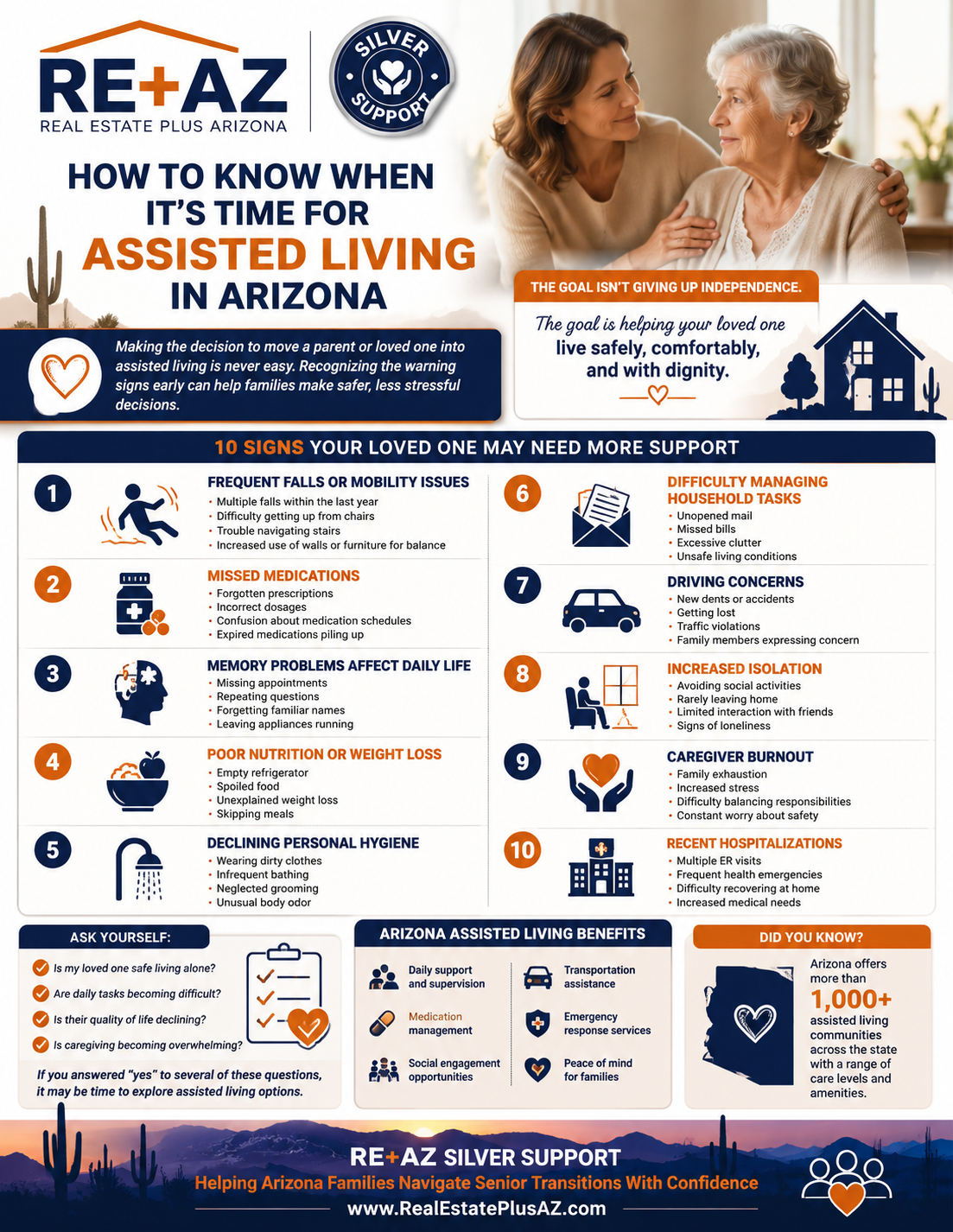
Sign #1: Frequent Falls or Mobility Problems
Falls remain one of the leading causes of injury among older adults.
If your loved one has experienced multiple falls within the past year, struggles to get out of chairs, or increasingly relies on walls and furniture for support, these may be signs that additional assistance is needed.
Watch for:
- Bruises without explanation
- Difficulty climbing stairs
- Unsteady walking
- Fear of falling
- Reduced physical activity
A single fall can dramatically alter a senior’s quality of life. Assisted living communities often provide safer environments designed specifically to reduce fall risks.
Sign #2: Medication Mistakes
Medication management becomes increasingly difficult as people age.
Many seniors take multiple prescriptions with varying schedules. Missing doses, doubling medications, or taking prescriptions incorrectly can lead to serious health consequences.
Warning signs include:
- Missed medications
- Expired prescriptions
- Confusion about medication schedules
- Frequent calls to doctors about prescriptions
Many assisted living communities provide medication management services that help residents stay on track and avoid dangerous mistakes.
Sign #3: Memory Issues Affecting Daily Life
Forgetfulness alone does not necessarily indicate a need for assisted living.
However, when memory challenges begin affecting safety and daily functioning, families should take notice.
Examples include:
- Leaving the stove on
- Missing appointments
- Repeating questions frequently
- Getting lost while driving
- Forgetting important names or dates
Families facing these concerns often begin researching memory care and assisted living options simultaneously.
Sign #4: Poor Nutrition and Weight Loss
Proper nutrition plays a critical role in healthy aging.
Unfortunately, many seniors begin skipping meals because shopping, cooking, and cleaning become overwhelming.
Warning signs include:
- Noticeable weight loss
- Empty refrigerators
- Spoiled food
- Lack of fresh groceries
- Reduced appetite
Assisted living communities provide structured meal programs that help seniors maintain proper nutrition while reducing the burden of meal preparation.
Sign #5: Declining Personal Hygiene
Changes in grooming and personal care can indicate that daily living activities are becoming difficult.
Family members may notice:
- Unwashed clothing
- Body odor
- Poor dental hygiene
- Neglected grooming habits
While these conversations can feel uncomfortable, declining hygiene often signals a need for additional support.
Sign #6: Difficulty Managing Household Responsibilities
Maintaining a home requires significant physical and mental effort.
As seniors age, routine tasks may become overwhelming.
Common signs include:
- Unopened mail
- Missed bill payments
- Excessive clutter
- Home maintenance issues
- Unclean living conditions
Many families first begin considering senior housing when they realize household management has become a significant challenge.
Sign #7: Driving Concerns
Driving represents independence for many seniors.
However, declining vision, slower reaction times, and memory issues can create dangerous situations.
Warning signs include:
- New dents or scratches
- Traffic violations
- Getting lost
- Difficulty navigating familiar routes
- Family concerns about driving ability
Arizona families frequently face difficult conversations surrounding driving before discussing assisted living.
Sign #8: Social Isolation
Loneliness can have serious consequences for both physical and mental health.
Seniors who spend most of their time alone often experience:
- Depression
- Anxiety
- Cognitive decline
- Reduced physical activity
Many assisted living communities offer social programs, group activities, fitness classes, and opportunities for connection that can dramatically improve quality of life.
Sign #9: Caregiver Burnout
Sometimes the strongest indication that a transition may be necessary isn’t the senior—it’s the caregiver.
Adult children often balance:
- Careers
- Spouses
- Children
- Household responsibilities
- Caregiving duties
When caregiving begins affecting your health, relationships, finances, or emotional well-being, it may be time to evaluate additional support options.
Caregiver burnout is extremely common and should never be ignored.
Sign #10: Frequent Hospital Visits
Repeated emergency room visits and hospitalizations often indicate increasing care needs.
Watch for:
- Multiple ER visits within a year
- Repeated falls
- Medication-related emergencies
- Difficulty recovering after illness
- Increasing medical complications
When health issues become more frequent, assisted living may provide a safer and more supportive environment.
Aging In Place Versus Assisted Living
Many Arizona families wonder whether aging in place remains the best option.
For some seniors, remaining at home works well with proper support systems.
For others, assisted living provides advantages that become increasingly important over time.
Benefits of assisted living often include:
- Medication management
- Housekeeping services
- Transportation assistance
- Social engagement
- Emergency response systems
- Daily support when needed
The goal is not to reduce independence but to create an environment where seniors can thrive safely.
When Should You Start The Conversation?
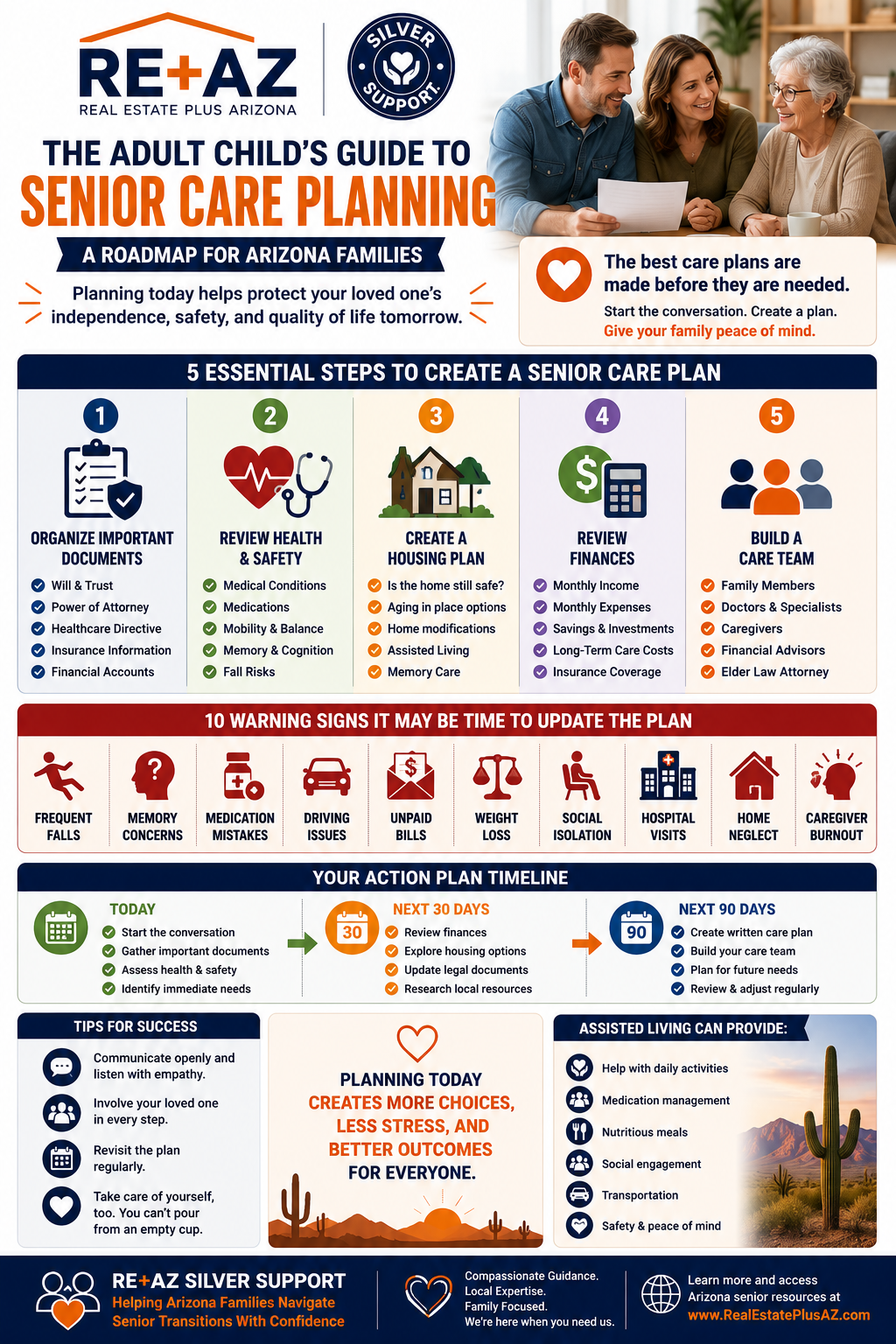
The best time to discuss assisted living is before an emergency occurs.
Approach the conversation with empathy rather than pressure.
Focus on:
- Safety
- Quality of life
- Independence
- Future planning
- Family support
Remember that this is often a gradual conversation rather than a single decision.
Families who start planning early generally experience smoother transitions and less stress.
Frequently Asked Questions
What age do most people move into assisted living?
There is no specific age. Most residents enter assisted living when daily activities become difficult or when safety concerns begin affecting quality of life.
How much does assisted living cost in Arizona?
Costs vary based on location, services, and level of care. Arizona assisted living communities typically range from several thousand dollars per month to significantly more for specialized memory care.
Is assisted living the same as a nursing home?
No. Assisted living focuses on helping seniors maintain independence while receiving support with daily activities. Nursing homes provide a higher level of medical care.
What if my parent refuses assisted living?
Resistance is common. Focus conversations on safety, quality of life, and support rather than loss of independence. Multiple discussions are often necessary.
How do I know if memory issues require more care?
When memory problems begin affecting safety, medication management, driving, or daily functioning, families should explore additional support options.
Final Thoughts
Recognizing when it’s time for assisted living is one of the most difficult decisions a family can face.
The goal is not to take away freedom.
The goal is to ensure that your loved one remains safe, healthy, connected, and able to enjoy life with dignity.
Free Arizona Real Estate Tools
60-second answers, built on Valley numbers. No sign-up required.
By recognizing the warning signs early, Arizona families can make thoughtful decisions before a crisis occurs and help their loved ones transition into the next stage of life with confidence.
Discover more from Real Estate Plus Arizona
Subscribe to get the latest posts sent to your email.