The Adult Child’s Guide To Senior Care Planning In Arizona
Few roles in life prepare us for becoming a caregiver to our parents.
For many Arizona families, senior care planning begins unexpectedly. A parent experiences a fall. A hospitalization raises concerns. Memory problems become harder to ignore. Suddenly, adult children find themselves making decisions that affect housing, healthcare, finances, and quality of life.
The challenge is that most families don’t begin planning until a crisis forces them to.
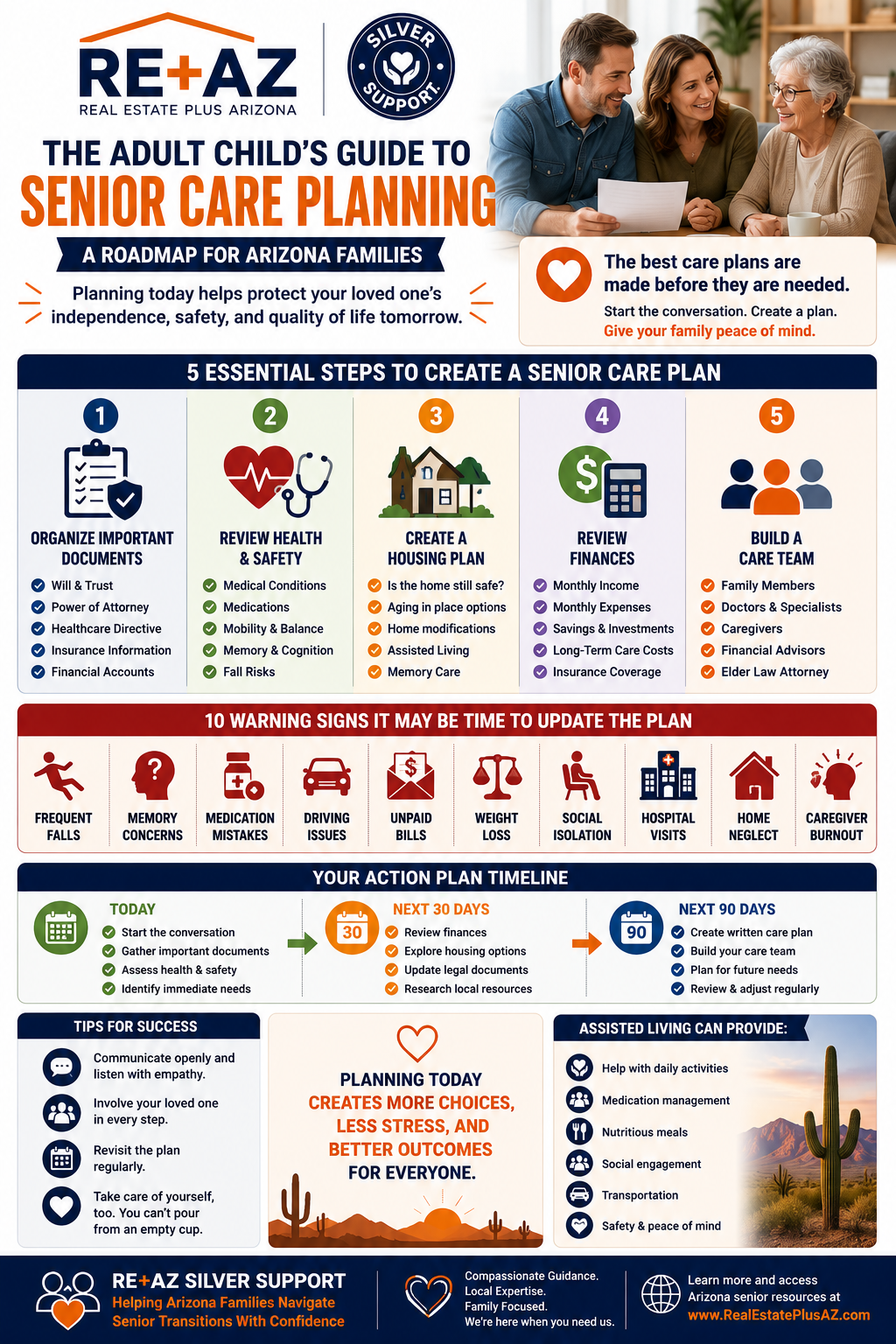
The good news is that senior care planning does not need to be overwhelming. With the right approach, families can create a roadmap that reduces stress, protects independence, and helps aging loved ones receive the support they need.
This guide is designed to help Arizona families navigate the senior care planning process before emergencies occur.
What Is Senior Care Planning?
Senior care planning is the process of preparing for the future needs of an aging loved one.
Rather than reacting to problems as they arise, families create a strategy for handling:
- Healthcare decisions
- Housing needs
- Financial planning
- Legal documentation
- Daily care requirements
- Transportation
- Long-term support options
The goal is not to remove independence.
The goal is to ensure that future decisions can be made thoughtfully rather than under pressure.
Why Planning Early Matters
Many families delay conversations about aging because they feel uncomfortable.
Parents may worry about losing independence. Adult children may fear appearing intrusive.
Unfortunately, waiting too long often creates more difficult situations.
When families plan early, they gain:
- More housing choices
- Better financial preparation
- Less family conflict
- Improved safety
- Reduced caregiver stress
- Greater peace of mind
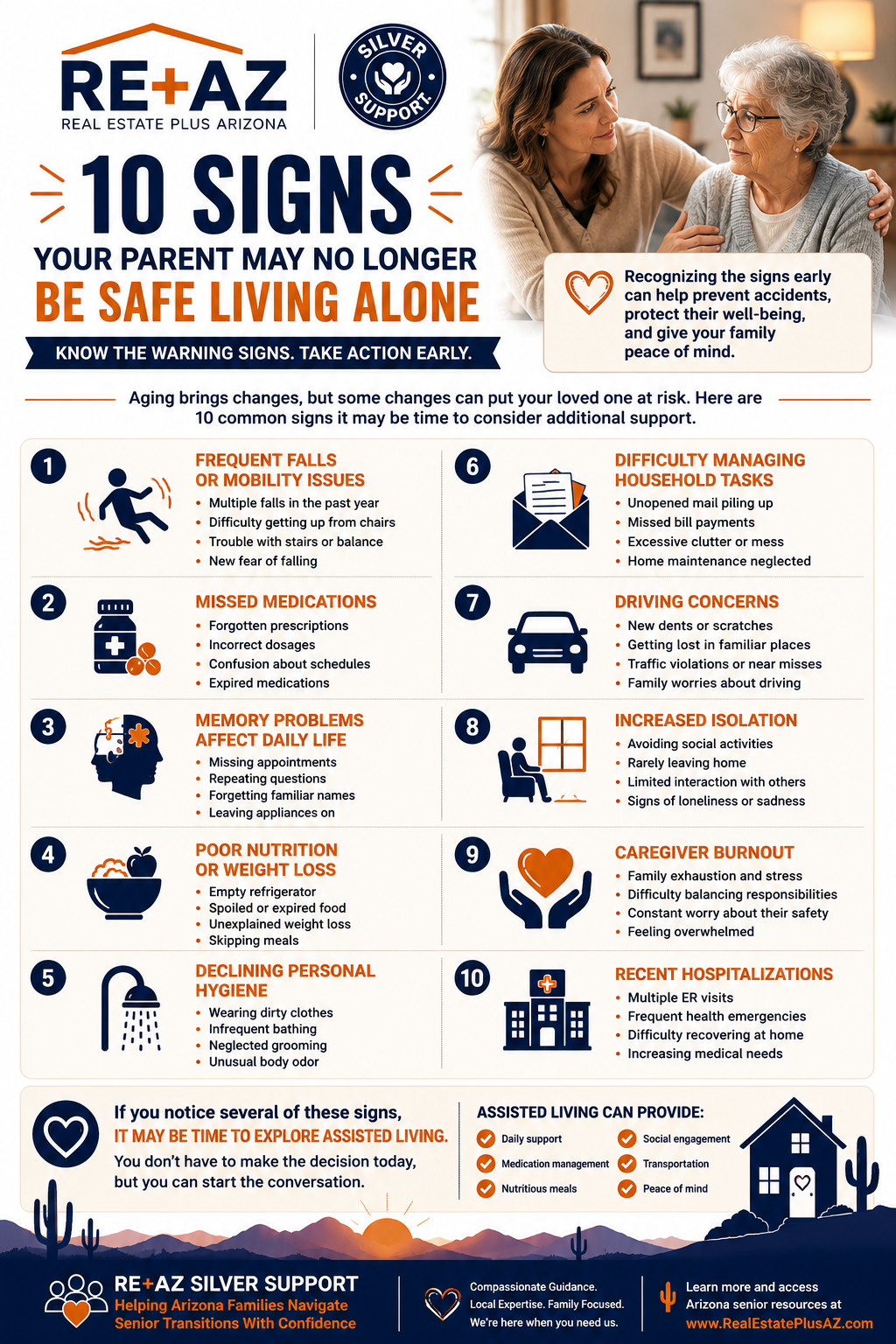
Many families first begin planning after noticing some of the same warning signs discussed in guides about recognizing when a parent may no longer be safe living alone.
Step 1: Assess Current Needs
Every senior’s situation is unique.
Start by evaluating how your loved one is currently functioning in daily life.
Consider:
Physical Health
- Mobility
- Balance
- Vision
- Hearing
- Chronic medical conditions
Cognitive Health
- Memory
- Judgment
- Decision-making
- Orientation
Daily Living Activities
Can they:
- Prepare meals?
- Manage medications?
- Drive safely?
- Pay bills?
- Maintain the home?
Identifying challenges early helps families understand where support may be needed in the future.
Step 2: Understand Housing Options
Housing decisions are often among the most significant aspects of senior care planning.
Many families assume there are only two options:
- Living independently
- Nursing home care
In reality, Arizona offers a wide range of senior living solutions.
These may include:
Aging In Place
Remaining at home with modifications and support services.
Independent Living
Communities designed for active seniors.
Assisted Living
Support with daily activities while maintaining independence.
Memory Care
Specialized environments for individuals experiencing dementia or Alzheimer’s disease.
Skilled Nursing
Higher levels of medical supervision and care.
Understanding these options early helps families make informed decisions if care needs increase.
Step 3: Have Honest Family Conversations
One of the most important steps in senior care planning is communication.
Parents should be involved in planning whenever possible.
Conversations should focus on:
- Goals
- Preferences
- Concerns
- Future wishes
Questions to ask include:
- Where would you like to live as you age?
- What worries you most about the future?
- Who would you trust to make decisions if needed?
- What kind of support would you be comfortable receiving?
These discussions often reveal priorities that families may not have previously considered.
Step 4: Organize Important Documents
Many crises become significantly more difficult because families cannot locate important paperwork.
Create a centralized system that includes:
Healthcare Documents
- Insurance cards
- Medication lists
- Physician contacts
Legal Documents
- Powers of attorney
- Healthcare directives
- Wills
- Trusts
Financial Information
- Bank accounts
- Investment accounts
- Retirement plans
- Monthly expenses
Having these documents organized can save tremendous stress during emergencies.
While you’re organizing documents, include the deed and owner’s title insurance policy for your parent’s home. Arizona also offers free alert tools that can flag suspicious sale activity or recorded documents involving a property — learn how in our guide to protecting your home from deed & title fraud in Arizona.
Step 5: Create a Financial Care Plan
Long-term care can be expensive.
Families should understand:
- Monthly income sources
- Retirement assets
- Healthcare expenses
- Insurance coverage
- Potential care costs
Many Arizona families begin exploring care options only after discovering how significantly costs can vary between different levels of support.
Financial planning does not require predicting every future expense. It simply means understanding available resources and potential scenarios.
Step 6: Build a Support Network
No caregiver should carry the entire burden alone.
Creating a support network helps prevent burnout and ensures consistent care.
Potential members include:
- Siblings
- Extended family
- Friends
- Neighbors
- Professional caregivers
- Medical providers
Assigning responsibilities can help reduce confusion and improve communication.
Step 7: Watch for Changes Over Time
Senior care planning is not a one-time event.
Needs evolve.
Families should regularly monitor:
Safety
Has the home become more difficult to manage?
Mobility
Are falls becoming more common?
Memory
Are cognitive challenges increasing?
Social Engagement
Has isolation become a concern?
Caregiver Stress
Are family members becoming overwhelmed?
These changes often determine when additional support becomes appropriate.
Common Warning Signs That a Care Plan Needs Updating
Certain events should trigger a review of your senior care plan.
These include:
- Falls
- Hospitalizations
- New diagnoses
- Medication changes
- Memory decline
- Driving concerns
- Financial mistakes
The sooner families address these developments, the more options they typically have.
Understanding Caregiver Burnout
Many adult children focus entirely on their parents and ignore their own well-being.
Caregiver burnout can include:
- Fatigue
- Anxiety
- Depression
- Sleep disruption
- Health problems
Providing care is a tremendous responsibility.
Seeking additional support does not mean failure.
In many cases, it improves outcomes for everyone involved.
Planning Before Assisted Living Becomes Necessary
One of the biggest misconceptions about senior care planning is that it begins when assisted living becomes necessary.
The opposite is true.
The best plans are developed before major care transitions occur.
By discussing housing preferences, financial resources, healthcare goals, and family expectations early, families can make future decisions with confidence rather than urgency.
Frequently Asked Questions
When should senior care planning begin?
The best time to start is before major health or safety concerns arise. Early planning provides more flexibility and reduces stress.
What if my parent refuses to discuss the future?
Resistance is common. Focus on preserving independence and honoring preferences rather than emphasizing limitations.
Do all seniors eventually need assisted living?
No. Some seniors remain independent for many years. Others benefit from additional support. Every situation is unique.
What is the biggest mistake families make?
Waiting until a crisis occurs. Emergency decisions often limit available options and increase stress.
How often should a senior care plan be reviewed?
At least annually, or whenever significant changes occur in health, mobility, memory, or living circumstances.
Final Thoughts
Senior care planning is ultimately an act of love.
It allows families to prepare for the future while preserving dignity, independence, and quality of life.
The goal is not to predict every challenge.
The goal is to create a framework that helps families respond thoughtfully when those challenges arise.
Free Arizona Real Estate Tools
60-second answers, built on Valley numbers. No sign-up required.
By starting conversations early, organizing important information, understanding available resources, and involving loved ones in the planning process, Arizona families can navigate aging with greater confidence and less uncertainty.
Discover more from Real Estate Plus Arizona
Subscribe to get the latest posts sent to your email.