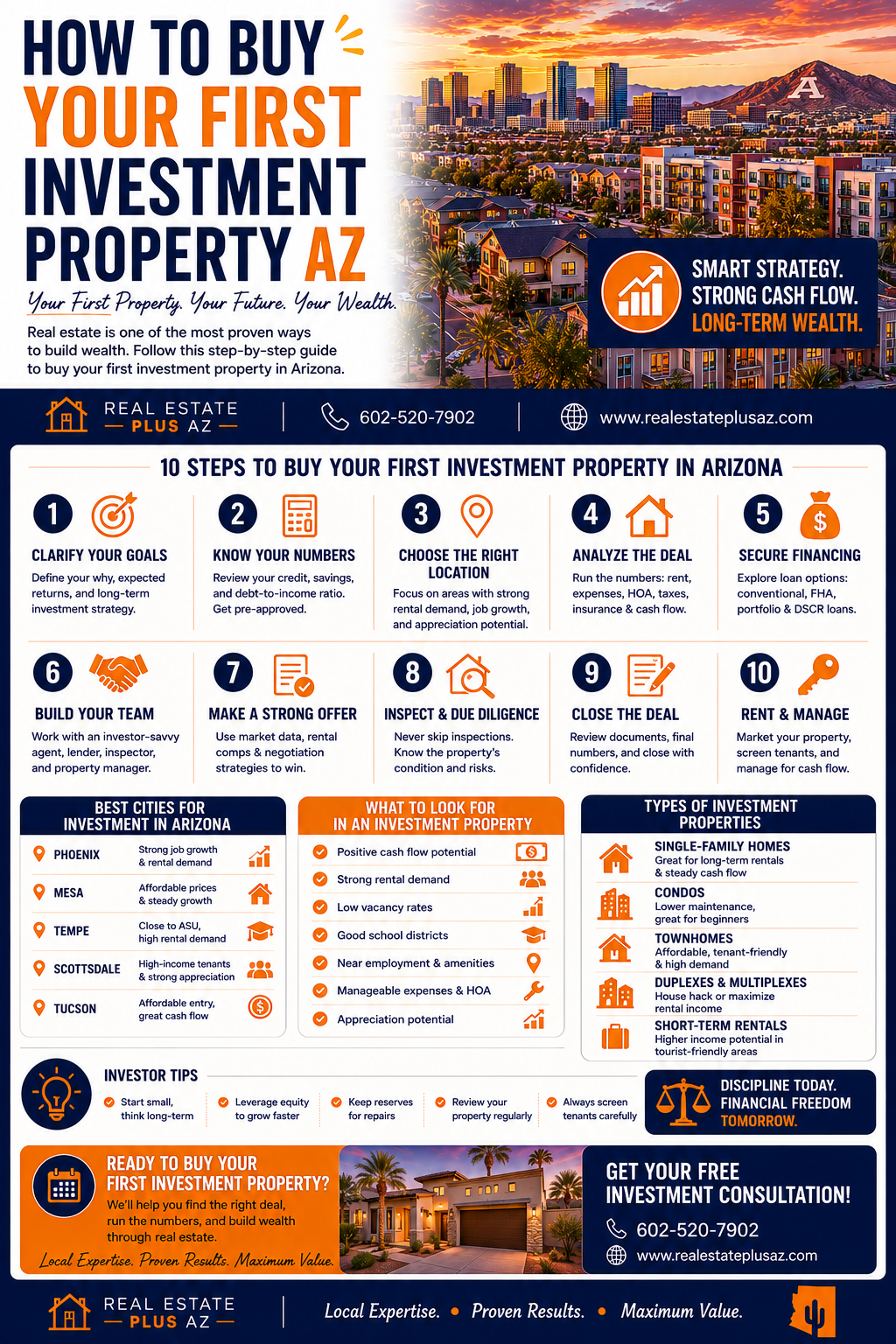

How to Buy Your First Investment Property in Arizona
Buying your first investment property can feel overwhelming at first, but Arizona continues to offer some of the strongest opportunities in the country for beginner real estate investors.
From Phoenix and Mesa to Tempe and Tucson, Arizona’s population growth, rental demand, and expanding economy continue to attract investors looking to build long-term wealth through real estate.
The key is understanding how to buy strategically instead of emotionally.
Here’s a step-by-step guide to purchasing your first investment property in Arizona.
Step 1: Clarify Your Investment Goals
Before looking at properties, decide what kind of investment strategy you want.
Are you looking for:
- Monthly cash flow?
- Long-term appreciation?
- A short-term rental?
- A house hack opportunity?
- A future retirement property?
Your strategy affects:
- Location
- Financing
- Property type
- Tenant profile
- Risk tolerance
The best beginner investors stay focused instead of chasing every opportunity.
Step 2: Know Your Numbers
Successful investors buy based on math, not emotion.
Review:
- Credit score
- Savings
- Debt-to-income ratio
- Cash reserves
- Estimated monthly payment
- Expected rental income
You should also account for:
- Property taxes
- Insurance
- HOA fees
- Maintenance
- Vacancy
- Repairs
- Property management
Many first-time investors underestimate operating costs.
Step 3: Choose the Right Arizona Market
Different Arizona cities offer different investment advantages.
Phoenix
Strong job growth and long-term appreciation potential.
Mesa
Affordable entry prices with strong rental demand.
Tempe
Excellent for student and professional rentals near ASU.
Scottsdale
Higher appreciation and luxury tenant demand.
Tucson
Lower acquisition costs and strong cash flow opportunities.
The right market depends on your goals, budget, and risk tolerance.
Step 4: Choose the Right Property Type
Single-Family Homes
Good for beginner investors seeking stable tenants and easier financing.
Condos
Lower maintenance but pay close attention to HOA fees and rental restrictions.
Townhomes
Popular with young professionals and often easier to maintain.
Duplexes & Fourplexes
Can provide stronger cash flow and allow house hacking strategies.
Short-Term Rentals
Higher income potential but more management intensive.
Step 5: Get Pre-Approved
Before making offers, talk with a lender experienced in Arizona investment properties.
Common financing options include:
- Conventional loans
- DSCR loans
- Portfolio loans
- FHA loans for house hacking
- VA loans for owner-occupied multi-family properties
A strong pre-approval gives you negotiating power and helps define your budget.
Step 6: Analyze the Deal Properly
Many new investors buy properties that “feel” like good deals instead of analyzing actual numbers.
Key metrics include:
- Cash flow
- Cap rate
- Cash-on-cash return
- Vacancy rate
- Rent-to-price ratio
- Repair estimates
Always review local rental comps before purchasing.
Step 7: Build the Right Team
A strong team can save you thousands of dollars and prevent major mistakes.
Your investment team may include:
- Real estate agent
- Lender
- Inspector
- Contractor
- Property manager
- CPA
- Insurance agent
Investor-friendly professionals make a major difference.
Step 8: Perform Due Diligence
Never skip inspections or rush through contingency periods.
Review:
- Roof condition
- HVAC systems
- Plumbing
- Electrical
- Foundation
- HOA documents
- Rental restrictions
- Insurance claims history
The inspection period is where investors protect themselves.
Step 9: Close the Deal
Before closing:
- Review settlement statements carefully
- Verify loan terms
- Confirm repair agreements
- Set up insurance
- Transfer utilities if needed
A smooth closing starts with strong preparation.
Step 10: Rent and Manage Strategically
Once the property closes:
- Market aggressively
- Screen tenants carefully
- Create clear lease agreements
- Maintain reserves for repairs
- Respond quickly to maintenance issues
Good property management protects long-term profitability.
Common Mistakes First-Time Investors Make
Buying Based on Emotion
Investments should be driven by numbers and strategy.
Ignoring HOA Restrictions
Some Arizona HOAs heavily restrict rentals.
Underestimating Repairs
Always maintain reserves for unexpected expenses.
Overleveraging
Cash flow matters more than owning the biggest property possible.
Skipping Market Research
Neighborhood quality matters just as much as the property itself.
Why Arizona Remains Attractive for Investors
Arizona continues attracting investors because of:
- Population growth
- Business expansion
- Warm climate
- Land constraints
- Strong rental demand
- Relatively landlord-friendly laws
- Increasing long-term housing demand
Cities near employment centers, universities, healthcare hubs, and transportation corridors continue to show strong investment potential.
Final Thoughts
Buying your first investment property in Arizona is less about timing the market perfectly and more about buying strategically.
Focus on:
- Strong locations
- Conservative numbers
- Long-term demand
- Sustainable cash flow
- Smart financing
- Proper due diligence
Real estate investing is often a long game, and Arizona continues to offer strong opportunities for investors willing to approach it strategically.
Discover more from Real Estate Plus Arizona
Subscribe to get the latest posts sent to your email.