Cap Rates in Phoenix Explained
Cap rates are one of the most commonly discussed metrics in real estate investing, but many newer investors misunderstand what they actually mean — especially in a rapidly growing market like Phoenix.
Understanding cap rates in Phoenix can help investors compare rental properties, analyze cash flow potential, and make more informed decisions when evaluating Arizona investment real estate.
The key is realizing that cap rates are only one piece of the investment puzzle.
What Is a Cap Rate?
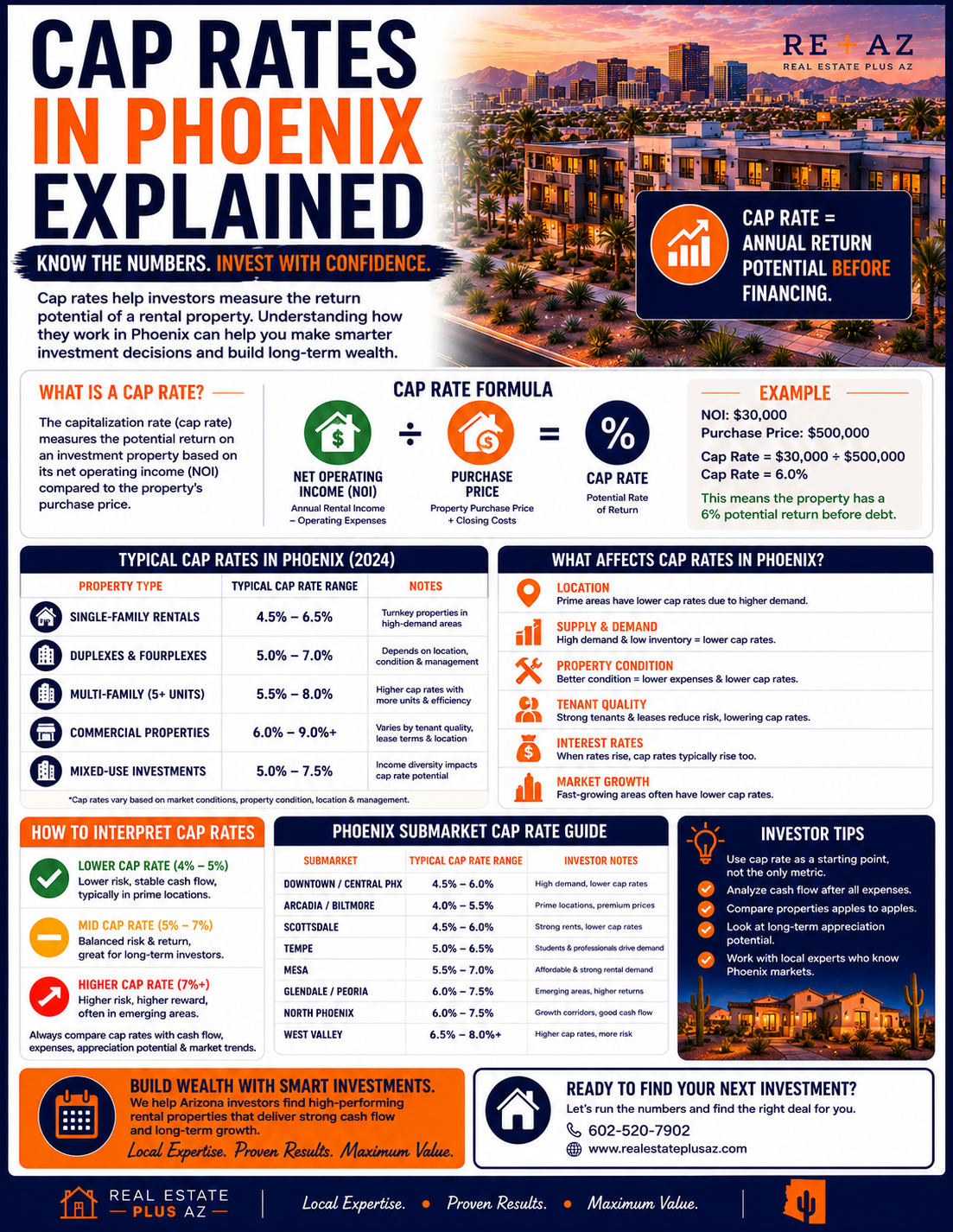
A cap rate, or capitalization rate, measures the potential annual return of an investment property before financing costs.
The formula is simple:
Cap Rate = Net Operating Income (NOI) ÷ Purchase Price
For example:
If a Phoenix rental property generates:
- $30,000 in annual net operating income
…and costs: - $500,000
…the cap rate would be:
6%
Cap rates help investors compare properties quickly across different asset types and neighborhoods.
Why Cap Rates Matter in Phoenix Real Estate
Phoenix has experienced major growth over the last decade, which has changed how investors evaluate rental properties.
As demand increases and prices rise, cap rates often compress in stronger areas because investors are willing to accept lower immediate returns in exchange for:
- appreciation potential
- stability
- stronger tenant demand
- lower vacancy risk
This is why luxury Scottsdale rentals and highly desirable Tempe investment properties often trade at lower cap rates than properties in emerging areas.
Cap rates help investors understand risk, cash flow, and market positioning.
Typical Cap Rates in Phoenix
Cap rates vary heavily depending on:
- location
- property type
- tenant quality
- condition
- lease structure
- rental demand
Here are general Phoenix investment property ranges investors often see:
Single-Family Rentals
Typically around 4.5%–6.5% depending on location and condition.
Prime areas with strong appreciation potential often show lower cap rates.
Duplexes & Fourplexes
Often range from 5%–7%.
Smaller multi-family properties in Mesa and Glendale sometimes provide stronger cash flow opportunities.
Multi-Family Apartment Buildings
Can range from 5.5%–8% or higher depending on:
- unit count
- operational efficiency
- neighborhood quality
- value-add potential
Phoenix apartment investing remains highly competitive because of strong rental demand and long-term growth projections.
Commercial Properties
Retail, office, and mixed-use cap rates vary dramatically depending on lease structures and tenant quality.
Some Arizona commercial real estate investors specifically target higher cap rate opportunities for stronger cash flow.
What Impacts Cap Rates in Phoenix?
Location
Properties in highly desirable areas usually have lower cap rates because demand is stronger.
Examples include:
- Scottsdale
- Arcadia
- Tempe near ASU
- Downtown Phoenix
Emerging neighborhoods may offer higher cap rates but often carry additional risk.
Supply and Demand
Phoenix rental demand remains strong due to:
- population growth
- housing shortages
- migration into Arizona
- expanding employment sectors
Strong demand can push prices higher and compress cap rates.
Property Condition
Turnkey rentals with updated systems and strong tenant appeal often trade at lower cap rates because investors perceive them as safer assets.
Value-add properties may show higher cap rates but require more operational work.
Interest Rates
Higher interest rates often affect cap rates because financing costs influence investor behavior and pricing expectations.
As borrowing becomes more expensive, buyers typically demand stronger returns.
Lower Cap Rate vs Higher Cap Rate
A lower cap rate is not automatically bad.
A higher cap rate is not automatically good.
This is one of the biggest misconceptions in Arizona real estate investing.
Lower Cap Rate Properties
Lower cap rates often indicate:
- stronger appreciation markets
- lower vacancy risk
- more stable tenants
- prime locations
- long-term desirability
Examples often include Scottsdale luxury rentals or highly walkable Tempe investment properties.
Higher Cap Rate Properties
Higher cap rates may indicate:
- higher cash flow
- emerging neighborhoods
- operational inefficiencies
- deferred maintenance
- greater management intensity
- increased risk
Some investors prefer higher cap rate opportunities because they prioritize monthly income over appreciation.
Why Investors Should Not Rely Only on Cap Rates
Cap rates are useful, but they do not account for:
- financing structure
- appreciation potential
- tax benefits
- depreciation
- leverage
- future rent growth
A property with a lower cap rate in a rapidly growing Phoenix neighborhood may outperform a higher cap rate property over time because of appreciation and rent increases.
Professional investors analyze:
- cash flow
- appreciation
- market trends
- tenant quality
- long-term demand drivers
- operational risk
…not just one metric.
Phoenix Submarkets Investors Watch Closely
Downtown Phoenix
Strong redevelopment and urban growth continue attracting investors seeking appreciation and long-term demand.
Tempe
Student housing and professional rentals near Arizona State University continue producing strong occupancy rates.
Mesa
Mesa often provides stronger cash flow opportunities with lower acquisition costs compared to Scottsdale or central Phoenix.
North Phoenix
Rapid expansion and employment growth continue supporting long-term rental demand.
Glendale & Peoria
West Valley growth continues attracting investors looking for higher cap rate opportunities and future appreciation.
Investor Tips for Analyzing Phoenix Cap Rates
Always Analyze Actual Expenses
Many listings underestimate maintenance, vacancy, or management costs.
Compare Similar Properties
Do not compare a Scottsdale luxury rental directly against a value-add Mesa duplex.
Look Beyond Today’s Numbers
Phoenix appreciation trends can dramatically impact long-term returns.
Understand Your Strategy
Cash flow investors and appreciation-focused investors often target completely different cap rate profiles.
Final Thoughts
Understanding cap rates in Phoenix is critical for making smarter Arizona real estate investment decisions.
The best investors use cap rates as a starting point — not the final answer.
Successful rental property investing in Arizona comes from combining:
- strong market selection
- conservative underwriting
- realistic expense analysis
- long-term demand trends
- operational discipline
As Phoenix continues growing, investors who understand both cash flow and appreciation dynamics will likely position themselves most effectively for long-term wealth creation.
Discover more from Real Estate Plus Arizona
Subscribe to get the latest posts sent to your email.