

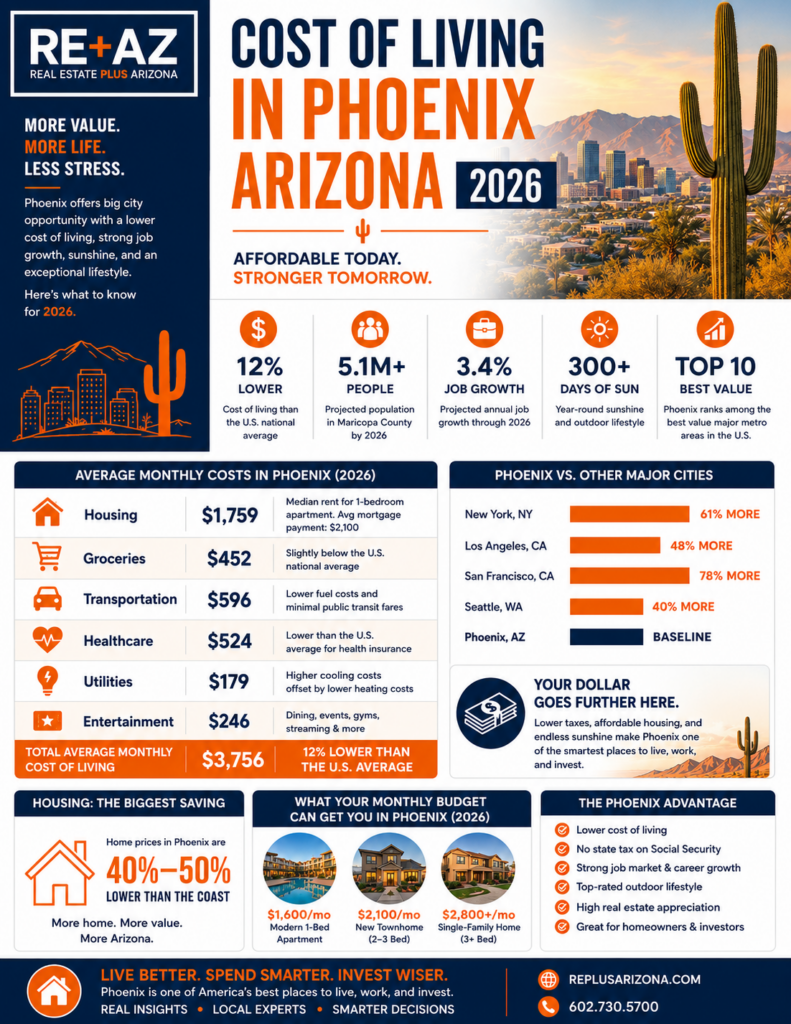
Cost of Living in Phoenix Arizona 2026: What It Really Costs to Live in the Valley
Phoenix has become one of the most talked-about cities in America. Between population growth, new employers, expanding infrastructure, and a lifestyle that attracts everyone from retirees to remote workers, the Valley continues to draw thousands of new residents every year.
The question many people ask before relocating is simple:
Can I actually afford to live in Phoenix in 2026?
The answer depends on where you live, whether you rent or own, your commuting habits, and your lifestyle expectations. While Phoenix remains significantly more affordable than many California and Pacific Northwest cities, it is no longer the bargain desert town many remember from twenty years ago.
Understanding the true cost of living requires looking beyond home prices alone. Housing, utilities, transportation, groceries, healthcare, childcare, and entertainment all play a role in determining how affordable life in Phoenix really is.
Housing Remains the Largest Expense
Housing continues to represent the biggest monthly cost for most residents.
While affordability challenges have increased over the past several years, Phoenix still offers opportunities across a wide range of budgets. Buyers researching current conditions should start with the Phoenix Housing Market Update 2026 to understand where prices and inventory currently stand.
As of 2026, many neighborhoods across the Valley remain attainable for middle-income households, particularly when compared to coastal markets.
Average Home Prices
Typical home values include:
- Entry-level homes: $325,000–$450,000
- Median Phoenix-area homes: $450,000–$550,000
- Move-up homes: $550,000–$800,000
- Luxury properties: $800,000+
Certain communities command significant premiums due to schools, amenities, and proximity to employment centers.
Buyers often compare neighborhoods using resources such as Best Places to Buy a Home in Arizona 2026 before deciding where to settle.
Rent Prices Across Phoenix
Not everyone moving to Arizona is ready to purchase immediately.
Renting remains popular among newcomers who want time to explore the Valley before making a long-term commitment.
Typical monthly rental rates include:
- Studio apartment: $1,100–$1,500
- One-bedroom apartment: $1,300–$1,900
- Two-bedroom apartment: $1,700–$2,500
- Three-bedroom home: $2,200–$3,800+
Investors closely monitor rental demand throughout the Valley, particularly in neighborhoods highlighted within Best Rental Markets in Phoenix.
Areas near major employment hubs and universities often maintain some of the strongest rental demand in Arizona.
Utility Costs Can Surprise New Residents
One expense many newcomers underestimate is electricity.
Summer temperatures frequently exceed 110 degrees, making air conditioning a necessity rather than a luxury.
Typical monthly utility costs include:
- Electricity: $150–$450+
- Water and sewer: $60–$120
- Natural gas: $20–$60
- Internet: $60–$100
Homes built with modern insulation, upgraded HVAC systems, and energy-efficient windows generally experience lower cooling costs.
Older homes may produce significantly higher summer utility bills.
Grocery Costs in Phoenix
Food costs have increased nationwide, and Phoenix is no exception.
A family of four can reasonably expect to spend between $800 and $1,500 per month on groceries depending on shopping habits and dietary preferences.
Average grocery prices include:
- Milk: $4–$6 per gallon
- Eggs: $3–$7 per dozen
- Bread: $3–$5 per loaf
- Chicken: $3–$6 per pound
- Ground beef: $5–$9 per pound
Fortunately, Phoenix offers a variety of grocery options ranging from warehouse clubs and discount grocers to premium organic markets.
Transportation Costs
Phoenix remains a vehicle-centric metropolitan area.
Although public transportation options continue improving, most residents still rely heavily on personal vehicles.
Transportation expenses typically include:
- Gasoline: $3–$5 per gallon
- Auto insurance: $150–$350 monthly
- Registration fees
- Maintenance and repairs
Individuals relocating from walkable urban centers should account for vehicle ownership when calculating their cost of living.
Healthcare Expenses
Healthcare costs generally align with national averages.
Residents benefit from access to major healthcare systems throughout the Valley, including hospitals, specialty clinics, and urgent care facilities.
Typical healthcare expenses include:
- Individual insurance: $350–$800 monthly
- Family plans: $900–$2,000+
- Routine physician visits
- Prescription medications
- Dental and vision coverage
Healthcare accessibility remains one of the reasons Phoenix continues attracting retirees and older adults.
Childcare Costs for Families
Families moving to Phoenix should carefully budget for childcare.
Typical monthly expenses include:
- Daycare: $900–$1,700
- Preschool: $700–$1,500
- After-school programs: $200–$600
Many households find childcare expenses rival mortgage payments during certain stages of family life.
Cost of Living by Area
Not every Phoenix-area city has the same affordability profile.
More Affordable Communities
Many buyers seeking value explore:
- Glendale
- Certain Mesa neighborhoods
- Parts of West Phoenix
- Select areas of Peoria
- Certain sections of Surprise
Current market conditions in these areas can be reviewed through resources like Mesa Housing Market 2026: What Buyers Need to Know Right Now and Glendale Real Estate Insights 2026 Market Breakdown.
Mid-Range Communities
Popular mid-range markets include:
- Tempe
- Chandler
- Gilbert
- Ahwatukee
- Peoria
Those evaluating Tempe often review both the Tempe Real Estate Market Breakdown 2026 and the North Tempe Real Estate Guide 2026 Market Breakdown to understand neighborhood-specific trends.
Premium Communities
Higher-cost markets include:
- Scottsdale
- Arcadia
- Biltmore
- Paradise Valley
- North Scottsdale
Luxury buyers frequently compare the insights provided in Scottsdale Real Estate Trends Right Now, North Scottsdale Luxury Market, and Arcadia Real Estate Market Guide.
Can First-Time Buyers Still Afford Phoenix?
Many first-time buyers assume homeownership is out of reach.
While affordability challenges exist, numerous programs continue helping buyers enter the market.
Resources worth reviewing include:
- First-Time Home Buyer Arizona Guide
- Arizona Down Payment Assistance Programs
- FHA Loans in Arizona Explained
- VA Loans Arizona Full Breakdown
- How Much Do You Need to Buy a House in Arizona?
Many buyers are surprised to discover that homeownership may require less cash than they initially expected.
What About Real Estate Investors?
Phoenix continues attracting investors due to population growth, job creation, and strong rental demand.
Investors evaluating opportunities often begin with:
- Is Arizona a Good Place to Invest in Real Estate?
- Cash Flow vs Appreciation in Phoenix
- Cap Rates in Phoenix Explained
- How to Buy Your First Investment Property AZ
- Multi-Family Investing in Phoenix
- BRRRR Strategy in Arizona
While appreciation rates have normalized compared to the post-pandemic boom, Phoenix continues benefiting from long-term demographic trends.
Frequently Asked Questions
Is Phoenix cheaper than California?
In most cases, yes. Housing costs, taxes, and overall living expenses remain substantially lower than many California metropolitan areas.
What salary is needed to live comfortably in Phoenix?
Many individuals find annual incomes between $60,000 and $90,000 support a comfortable lifestyle, while families often require higher household earnings.
Is Phoenix still growing?
Yes. Population growth, business relocation, and infrastructure investments continue supporting long-term demand.
Is renting cheaper than buying?
The answer depends on current mortgage rates, available inventory, down payment funds, and how long you intend to stay in the area.
Is Phoenix a good place to invest?
Many investors continue viewing Phoenix as one of the strongest long-term markets in the Southwest due to job growth, population growth, and housing demand.
Final Thoughts
The cost of living in Phoenix in 2026 is higher than it was a decade ago, but the city continues offering opportunities that many major metropolitan areas no longer provide.
Whether you’re a first-time homebuyer, investor, retiree, remote worker, or growing family, Phoenix remains one of the most dynamic housing markets in the country.
Success comes from understanding the full financial picture—not just home prices. Housing, transportation, utilities, childcare, and lifestyle costs all contribute to affordability.
For many residents, the combination of economic opportunity, sunshine, outdoor recreation, and long-term growth potential still makes Phoenix one of the most compelling places to live in the American Southwest.